project minnio - backdrop

In a world of high pixel images there stands an aesthetically pleasing space where low pixel images can be brought to life, the visual seemingly changes when approaching.
The medium is 2”x2” up to 8”x8” wood pieces placed as one. The wood is not printed nor laser etched but gray-scaled via old style wood burning, one pixel at a time.
Example to left 4" x 4" pieces.
The Machines: The mechanics, electronics, and firmware for Version 1 and 2 were deleveloped in house.
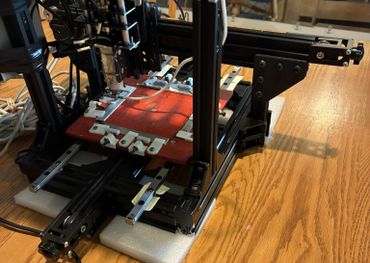
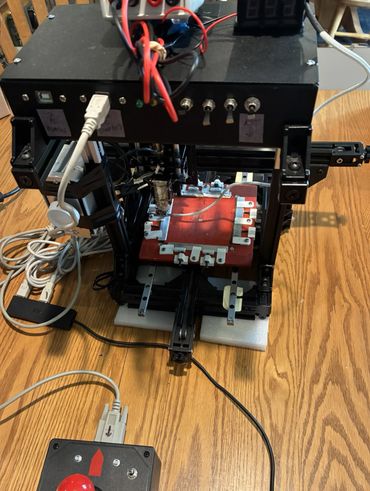
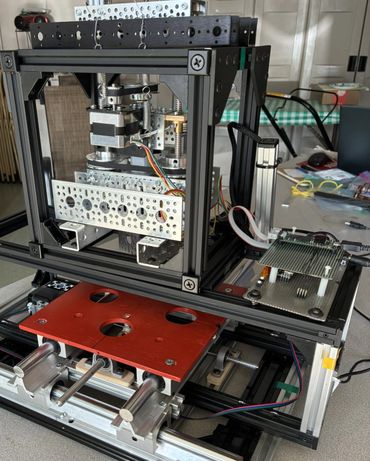
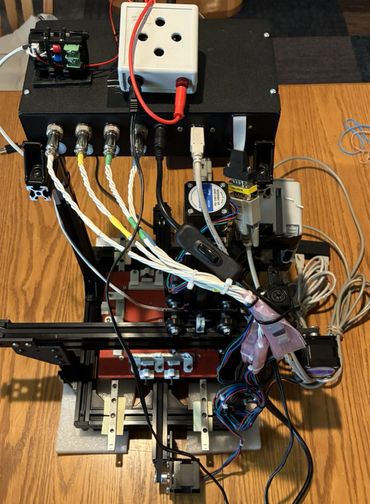
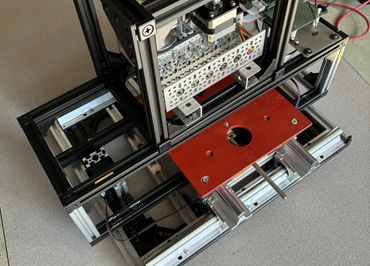
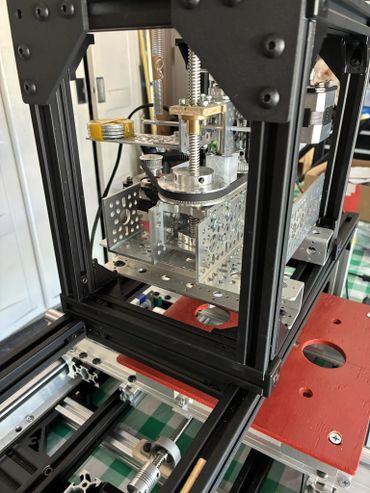

The System
The machine that produces this is customed designed and built. Unlike 3D printers and Laser etching the unit is void of a microcontroller. Instead, the X-Y, burning head, and randomization movement is controlled via an Intel® Cyclone® FPGA. The FPGA is in-turn driven by Python™programming language data exiting a laptop USB port. The firmware via for FPGA is gate level via Register Transfer Level (RTL) in Verilog.
The data transmitted to individual tiles is extremely small and arrives via Python™ Serial. The Python™scripts also massage the image file extensively. First the image is parsed and gray scaled. It is then adjusted with positioning data, interstice ordering, and burn data. A “weighting file” may be used when burning different wood types. The result is (in this case) qty 220 image.bil files
(image.bil is a new file format invented by Bill).